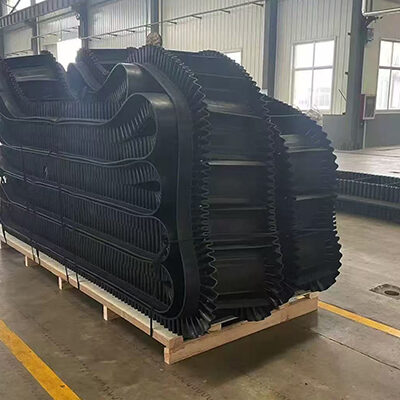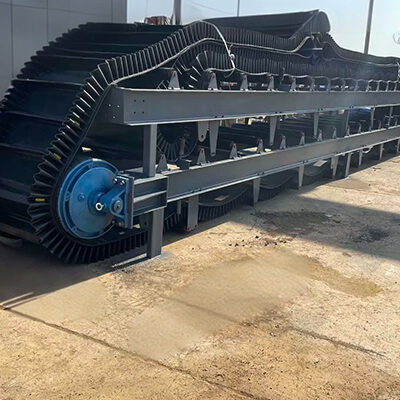



Unlike ordinary horizontal conveyor belts, large angle conveyor systems face inherent operational challenges, including material fallback, belt slippage, and lateral deviation during steep-angle lifting. Stable operation does not rely on single equipment adjustment, but on standardized structural matching, daily parameter control and routine maintenance management. First, matched sidewalls and T-cleats are essential to lock materials firmly on the belt surface, preventing granular and block materials from sliding down due to gravity during high-inclination conveying. Second, consistent belt tension and aligned roller sets eliminate running deviation and uneven stress, which are the main causes of belt wear and operational jitter. Reasonable speed setting also avoids material spillage caused by excessive start-up and operating velocity. In addition, regular cleaning of belt surface and roller components removes accumulated residual materials, which effectively avoids slipping points and unbalanced operation. Standardized inspection of driving motors, tensioning devices and supporting frames ensures the entire conveying…
READ MORE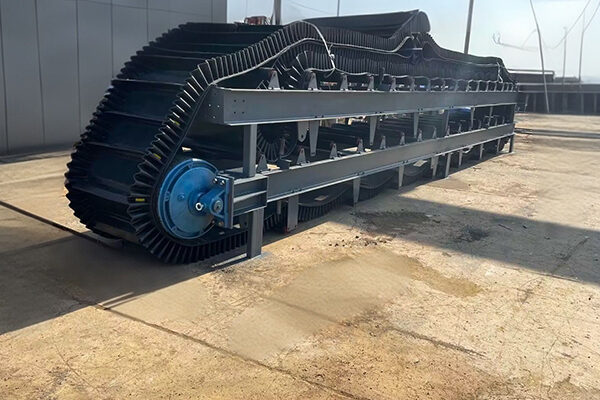
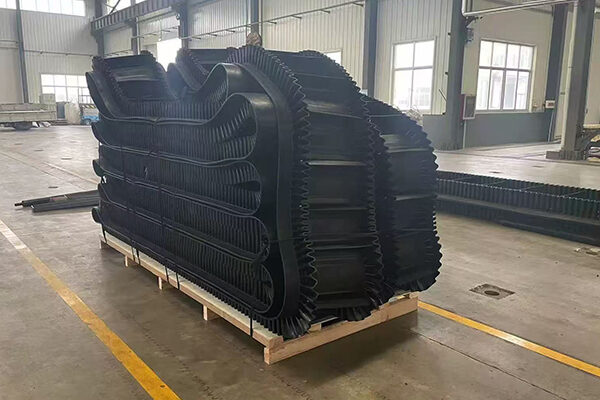
Large angle conveyor belts are specially engineered for high-inclination and vertical bulk material transportation, overcoming the inclination limitations of conventional flat belt conveyors. Fitted with corrugated sidewalls and T-cleats, they stably transport granular and lump materials without fallback or spillage at steep angles of 30° to 90°. Their core advantage lies in enabling continuous, high-efficiency material lifting within constrained spaces, significantly saving floor space and simplifying system layout compared with multi-stage horizontal conveyor setups. This conveyor type is widely applied across industrial fields. In mining, it delivers coal and ore from underground tunnels and stockyards to processing platforms. In cement and construction industries, it conveys limestone, gravel and clay for raw material feeding and finished material transportation. It is also commonly used in thermal power plants, chemical factories, ports and grain terminals for handling coal, ash residue, chemical particles and grain granules. Featuring stable operation, low power consumption and…
READ MORE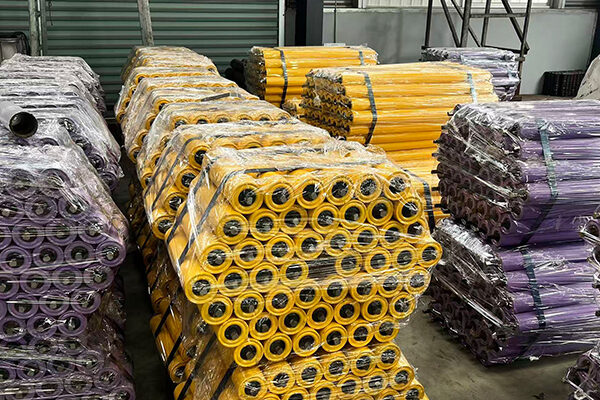
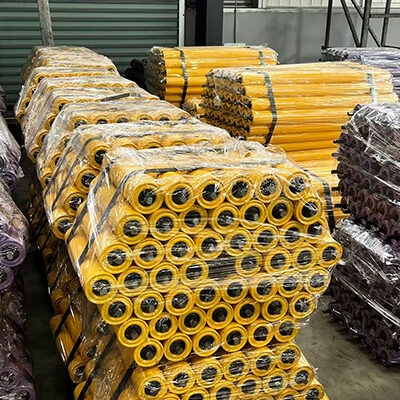
Walk into any bulk material conveying workshop, whether in mining, cement plants, ports, or power stations, and idler failure ranks among the most common causes of unplanned downtime. Belt deviation, abnormal noise, inflexible rotation and severe roller wear are typical issues encountered by on-site teams on a daily basis. While these problems are familiar to experienced operators and maintenance staff, premature idler failure often causes unexplained operational losses and frequent replacement costs for new engineers, procurement teams and overseas partners. In most cases, short idler service life does not result from poor quality alone. It is caused by improper model matching, incorrect installation and inadequate daily maintenance. Unlike high-profile core components such as conveyor belts and drive motors, idlers are often underestimated as simple auxiliary parts. In reality, as key supporting units of the entire conveyor system, idlers withstand continuous material impact, belt friction and harsh environmental erosion. Scientific…
READ MORE
For first-time overseas buyers of large-angle conveyor belts, procuring this specialized industrial belt is far more than just checking dimensions and quoting prices. Unlike standard flat conveyor belts that feature universal, one-size-fits-all specifications, steep-angle sidewall belts are highly customized for specific working conditions. A belt model that runs flawlessly on one site may suffer from persistent material spillage, belt slippage and frequent unplanned downtime on another. Most cross-border disputes, on-site operational failures and post-purchase economic losses are caused by insufficient technical communication and improper belt configuration prior to ordering. Seasoned procurement engineers always put actual on-site working conditions above generic standard products, rather than choosing conventional belts blindly. The most critical parameter to confirm in advance is the real conveying inclination angle. Many overseas buyers simply note “inclined conveyor belt” on purchase orders, failing to realize that 20°, 45°, 70° and even vertical conveying scenarios require completely…
READ MORE