


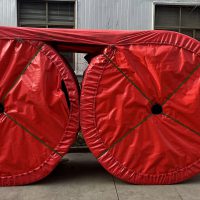
Usage:
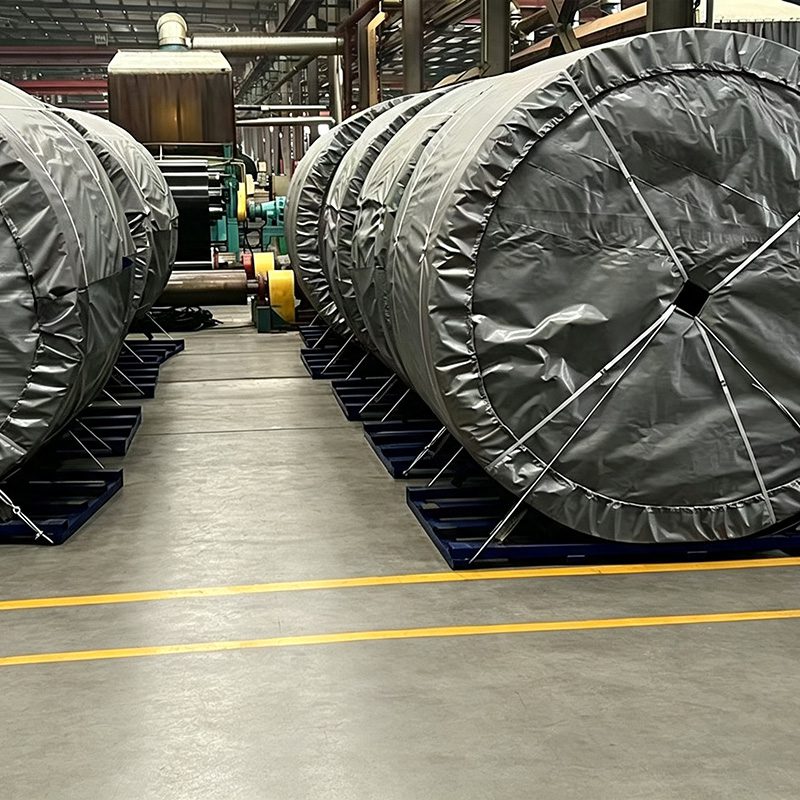
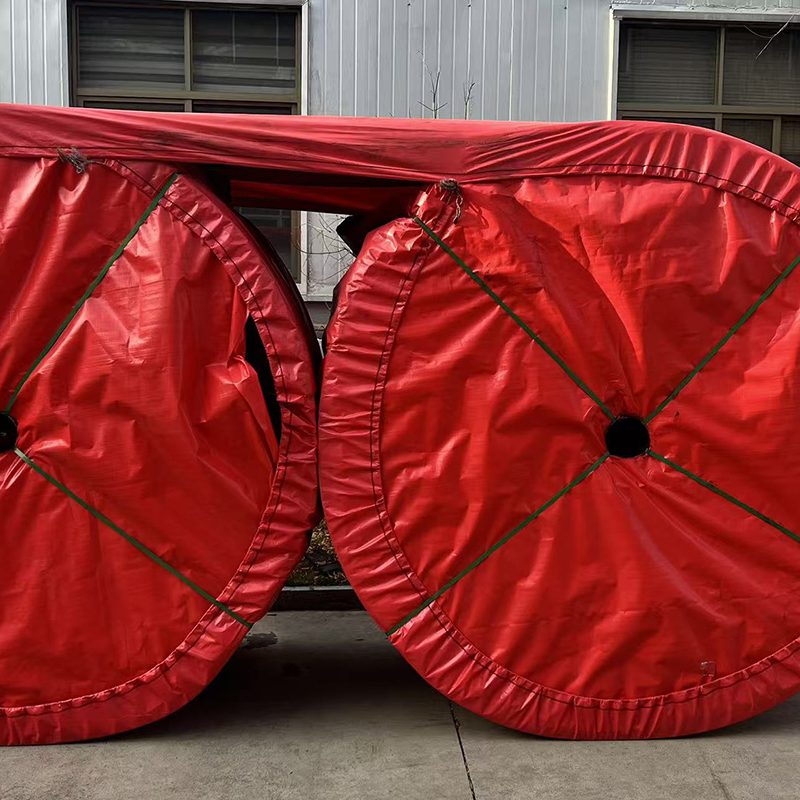
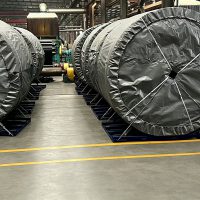
Fabric conveyor belts are suitable for medium- and long-distance, heavy-load, and high-speed material conveying. They are widely used in industries such as mining, metallurgy, construction, ports, electric power, and chemicals.
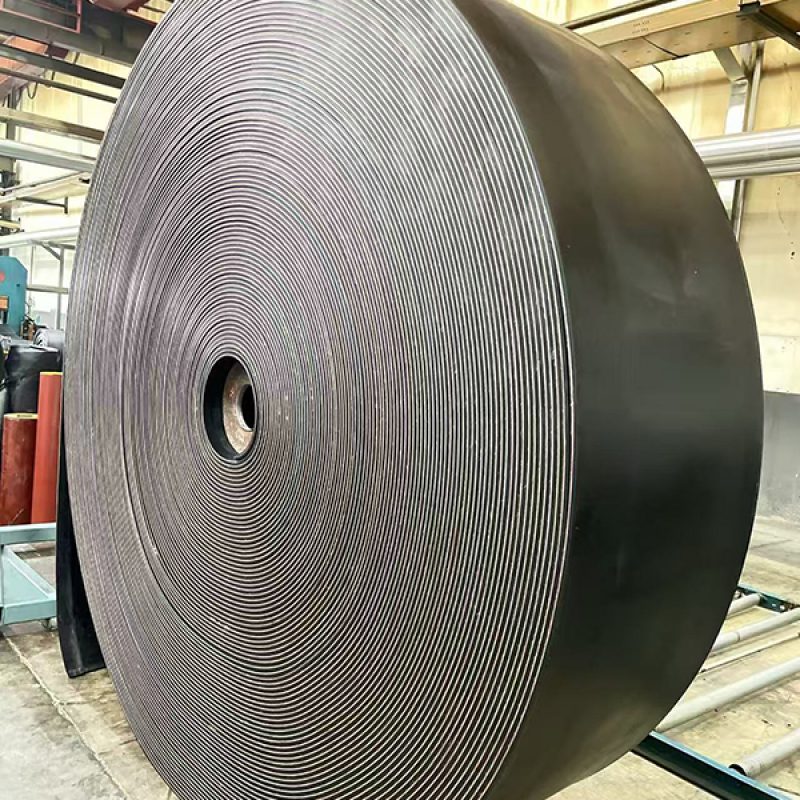
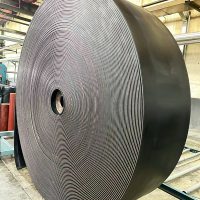
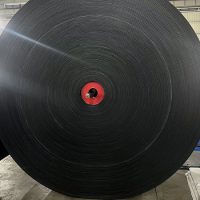
Fabric conveyor belts are named according to different fabric materials: nylon conveyor belts, EP conveyor belts, and cotton fabric conveyor belts.
1. Nylon conveyor belts: good flexibility, high tension strength, impact resistance, and low elongation. Suitable for heavy-duty, high-speed, and medium-distance material handling.
2. EP conveyor belts: high modulus, low elongation, impact resistance, and excellent heat resistance. Suitable for heavy-duty, high-speed, and medium-distance material handling.
3. Cotton fabric conveyor belts: suitable for medium-distance material conveying.
Fabric conveyor belts are named according to different cover grades:
1. Standard belt: generally used for small powders, granules, and lump materials.
2. Oil-resistant conveyor belt: generally used for timber and grain transportation.
3. Acid- and alkali-resistant conveyor belt: commonly used for chemical conveying.
4. Cold-resistant belt: this belt can operate in cold environments such as Northeast China, Russia, and Nordic countries.
5. Abrasion-resistant conveyor belt: generally used for conveying hard or irregularly shaped materials, such as iron ore, diamonds, copper, and other minerals.
6. Fire-resistant conveyor belt: commonly used in underground coal mines, steel plants, and similar locations.
7. Heat-resistant conveyor belt: based on the operating environment temperature, we can produce three different grades of heat-resistant conveyor belts, including grades with heat resistance below 120°C (HR120), below 150°C (HR150), below 180°C (HR180), and below 200°C (HR200). Generally used in cement plants and steel plants.